

Industry
Hospital Diagnostic Laboratory System
Engagement Type
Laboratory Quality Systems and Accreditation Transformation
DealBridge Services
Strategic Advisory • Quality Systems Design • Accreditation Readiness • Implementation Governance
Executive Overview
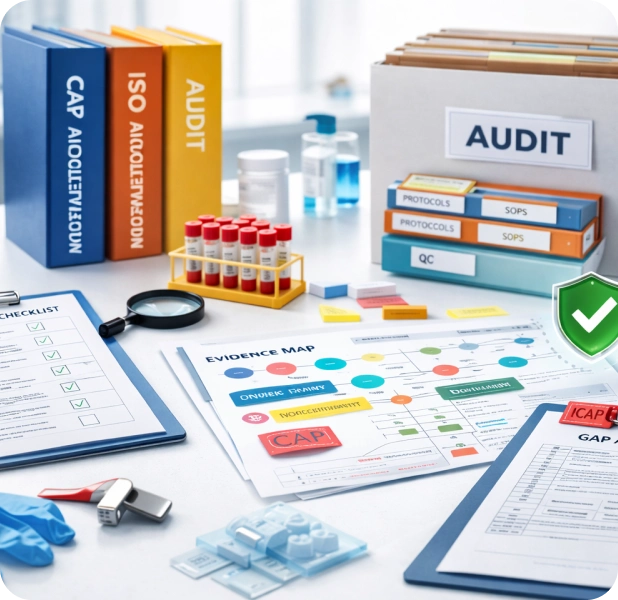
A hospital laboratory system preparing for international accreditation faced challenges aligning operational practices with structured laboratory quality standards. Although the laboratories delivered a wide range of diagnostic services, quality management processes had developed gradually across departments and lacked consistent standardization.
Laboratory leadership recognized that preparing for accreditation would require strengthening governance over documentation, operational procedures, quality monitoring systems, and staff competency frameworks.
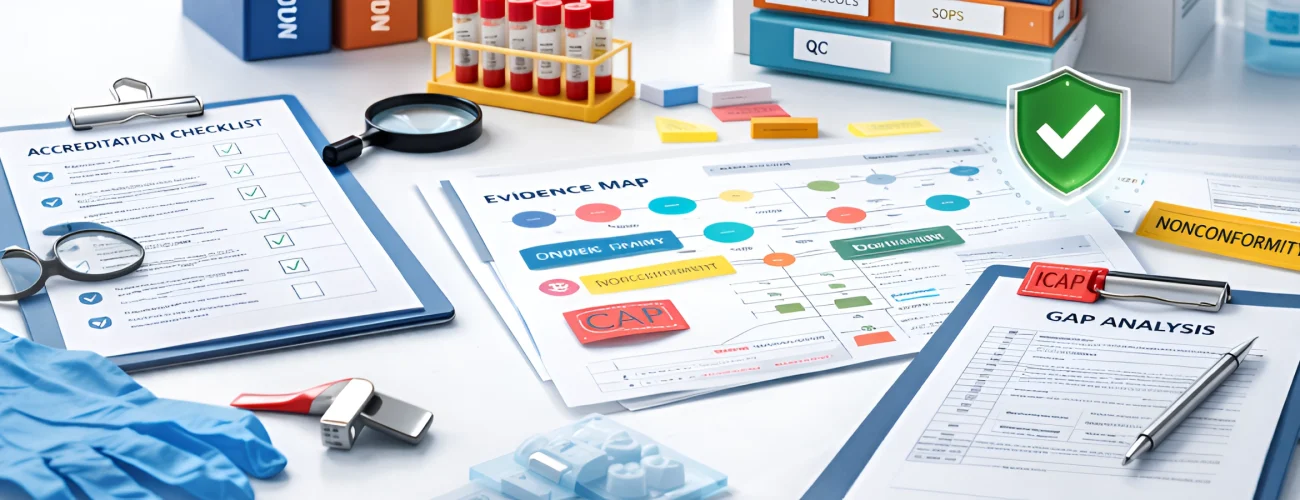
DealBridge Global was engaged to support a comprehensive quality transformation initiative aimed at aligning laboratory operations with internationally recognized quality management principles and accreditation requirements.
Through a structured assessment and implementation process, DealBridge helped the organization build a standardized laboratory quality framework that improved operational consistency, strengthened governance structures, and prepared the laboratory system for accreditation readiness.
The Situation
The hospital laboratory system supported a broad range of diagnostic services including emergency testing, inpatient diagnostics, outpatient laboratory services, and specialized clinical programs.
Over time, individual laboratory sections developed their own operational procedures and documentation practices based on local operational needs. While these practices supported routine laboratory operations, they were not consistently aligned across departments.
Quality monitoring activities also varied between laboratory units. Some sections implemented internal quality processes, while others relied on informal documentation practices or locally developed workflows.
Laboratory leadership recognized that achieving accreditation required a unified quality management framework capable of supporting consistent operational practices across the entire laboratory system.
At the same time, laboratory staff needed practical guidance on how accreditation requirements could be integrated into daily laboratory operations without disrupting diagnostic services.
Hospital leadership therefore sought expert support to guide the organization through a structured laboratory quality transformation process.
Core Challenge
The central challenge facing the laboratory system was aligning existing operational practices with a structured quality management framework.
Documentation practices varied between laboratory sections, creating inconsistencies in how procedures were recorded, maintained, and updated. Standard operating procedures existed in some areas but were not uniformly structured or centrally controlled.
Quality oversight mechanisms were also decentralized. Without a coordinated governance structure, monitoring compliance with standardized procedures across the laboratory system became difficult.
Operational workflows had evolved independently within individual laboratory units, leading to variations in how processes were performed and documented.
In addition, structured frameworks for staff training and competency documentation required further development to meet accreditation expectations.
Preparing for accreditation therefore required coordinated improvements across documentation systems, governance structures, and operational practices.
The DealBridge Bridge Model
DealBridge structured the quality transformation initiative around a framework linking operational challenges with sustainable quality outcomes.
Operational Challenges
Variation in laboratory procedures
Inconsistent documentation practices
Limited centralized quality oversight
Accreditation readiness gaps
DealBridge Bridge
Variation in laboratory procedures
Inconsistent documentation practices
Limited centralized quality oversight
Accreditation readiness gaps
Operational Outcomes
Consistent laboratory practices
Improved documentation control
Stronger quality oversight
Sustainable accreditation readiness
The DealBridge Approach
DealBridge implemented a structured quality transformation strategy addressing documentation systems, governance structures, and accreditation readiness.
Quality System Assessment
DealBridge conducted a comprehensive evaluation of laboratory procedures, documentation systems, quality monitoring practices, and governance structures across laboratory sections. This assessment identified areas requiring improvement to align with accreditation standards.
Documentation Standardization
Standardized documentation templates and procedures were developed to support consistent practices across laboratory departments. These included structured formats for standard operating procedures, quality records, and operational documentation.
Quality Governance Structure
DealBridge supported the development of centralized quality oversight mechanisms including laboratory quality committees, internal audit programs, and performance monitoring frameworks. These governance structures helped ensure consistent implementation of quality practices across laboratory units.
Staff Training and Competency Framework
Training programs and competency documentation systems were introduced to support staff development and ensure alignment with accreditation requirements.
Controlled Milestones
The quality transformation initiative was implemented through a structured milestone framework.
Phase 1 – Quality System Assessment
Evaluation of documentation practices, operational procedures, and quality governance structures.
Phase 2 – Quality Framework Design
Development of standardized documentation systems and centralized quality oversight structures.
Phase 3 – Implementation Planning
Preparation of training programs, documentation updates, and internal audit processes.
Phase 4 – Accreditation Readiness
Alignment of laboratory operations with accreditation requirements and preparation for external evaluation.
Results
Following implementation of the quality transformation program, the laboratory system achieved several operational improvements.
Key outcomes included:
- standardized documentation across laboratory sections
- improved consistency of operational procedures
- stronger oversight of laboratory quality systems
- improved staff awareness of quality management practices
- improved readiness for laboratory accreditation
These improvements strengthened the reliability, transparency, and governance of diagnostic services across the laboratory system.
Strategic Insight
Quality management systems are essential for maintaining reliable and consistent laboratory diagnostics.
Preparing for accreditation requires more than updating documentation; it requires embedding quality principles into daily laboratory operations and governance structures.
DealBridge Global supports healthcare organizations in developing sustainable laboratory quality systems that align operational practices with internationally recognized accreditation standards.