

Industry
National Public Health Laboratory System
Engagement Type
Biosafety Governance and Containment Risk Framework
DealBridge Services
Strategic Advisory • Biosafety Governance Design • Containment Policy Framework • Risk-Based Laboratory Operations
Executive Overview
A national health authority overseeing multiple diagnostic and research laboratories sought to strengthen governance over activities involving high-consequence pathogens. Laboratories across the system operated under different containment environments ranging from containment level 2 (CL2) diagnostic laboratories to facilities capable of CL3 and CL4 operations.
Although biosafety regulations were in place, operational practices and containment decisions varied between institutions. This variability created uncertainty regarding which laboratory activities should be conducted within specific containment environments and increased the complexity of biosafety oversight.
DealBridge Global was engaged to design a risk-based containment governance framework capable of standardizing laboratory activity rules across CL2, CL3, and CL4 facilities. The objective was to ensure that diagnostic and research activities involving infectious materials were performed within the appropriate containment environment while strengthening biosafety governance and regulatory compliance.
Through a structured biosafety assessment and governance design process, DealBridge developed a containment framework that aligned pathogen risk, laboratory activities, and containment requirements across the national laboratory system.
The Situation
The national laboratory system included a network of clinical laboratories, specialized research facilities, and high-containment laboratories supporting infectious disease diagnostics, pathogen surveillance, and biomedical research.
CL2 laboratories supported routine diagnostic testing involving moderate-risk pathogens commonly encountered in clinical laboratories. CL3 laboratories handled airborne infectious agents requiring enhanced containment procedures, while a limited number of facilities possessed high-containment capabilities required for the most hazardous pathogens.
While biosafety regulations existed, laboratory institutions often interpreted containment requirements differently. This led to variations in how certain laboratory activities involving infectious materials were performed across the system.
Public health authorities were also increasingly focused on improving preparedness for emerging infectious diseases. Ensuring that laboratory activities were performed within appropriate containment environments became a critical priority for national biosafety governance.
Leadership therefore recognized the need for a clearer framework defining which diagnostic and research activities should occur at each containment level based on pathogen risk and operational considerations.
Core Challenge
The primary challenge facing the laboratory system was operational clarity across containment environments.
Laboratories across the network had different containment capabilities and infrastructure designs, making it difficult to apply biosafety guidance consistently.
In some situations, laboratory personnel lacked clear operational guidance regarding which activities required CL3 containment rather than CL2 environments. Emerging pathogens also introduced new uncertainty regarding containment requirements for diagnostic and research activities.
Without a structured governance framework, containment decisions could vary between laboratories, creating potential biosafety and regulatory risks.
Addressing these challenges required a risk-based containment governance model capable of aligning laboratory activities with appropriate biosafety environments.
The DealBridge Bridge Model
DealBridge structured the containment governance initiative around a framework linking biosafety challenges with operational clarity.
Operational Challenges
Variation in biosafety practices across laboratories
Unclear activity classification across containment levels
Distributed laboratory capabilities
Emerging pathogen preparedness requirements
DealBridge Bridge
Risk-based containment activity classification
Standardized biosafety governance framework
Clear laboratory activity rules by containment level
National biosafety oversight structure
Operational Outcomes
Consistent containment practices across laboratories
Improved biosafety compliance and risk management
Clear operational guidance for pathogen handling
Stronger national preparedness for high-risk pathogens
The DealBridge Approach
DealBridge implemented a structured governance design process addressing biosafety risk classification, containment policy development, and oversight mechanisms.
Biosafety Capability Assessment
DealBridge conducted an assessment of containment capabilities across laboratories, including facility infrastructure, biosafety procedures, personnel training, and regulatory compliance. This evaluation provided a system-wide understanding of biosafety readiness.
Pathogen Risk Classification
A risk classification framework was developed to guide containment decisions based on pathogen characteristics such as transmissibility, disease severity, and availability of medical countermeasures.
Containment Activity Rules
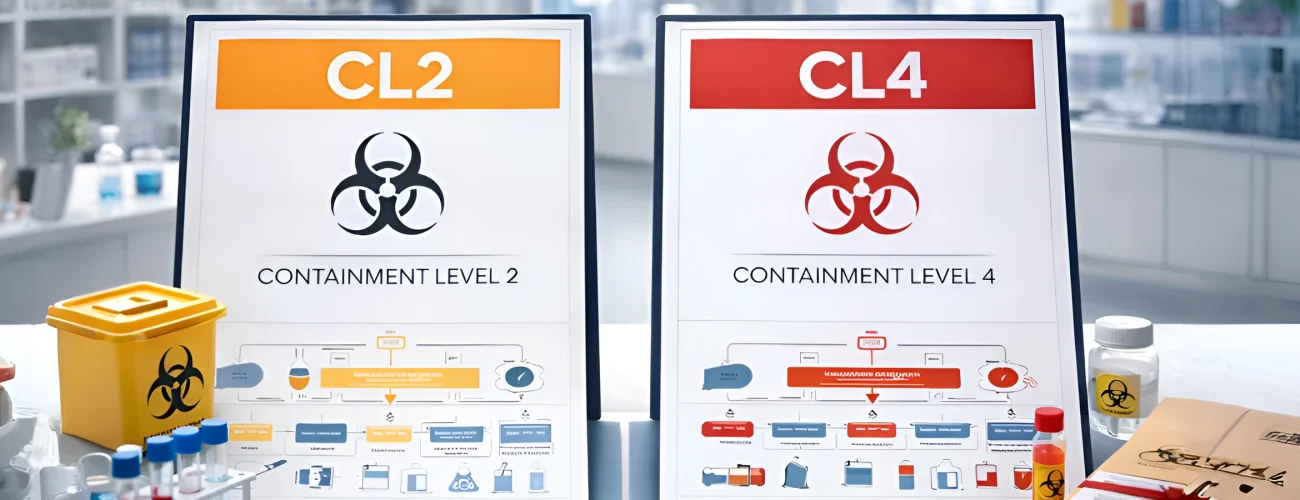
Operational rules were defined specifying which diagnostic and research activities should occur within CL2, CL3, or CL4 containment environments. These rules addressed laboratory procedures such as specimen processing, pathogen culture, experimental research, and advanced diagnostics.
Governance and Oversight
DealBridge designed a biosafety governance structure to support consistent implementation of containment policies. This framework included oversight committees, reporting mechanisms, and compliance monitoring processes.
Controlled Milestones
The containment governance framework was developed through a structured milestone approach.
Phase 1 – Capability Assessment
Evaluation of containment facilities, biosafety procedures, and laboratory practices.
Phase 2 – Risk Classification Development
Creation of pathogen risk categories and containment activity guidelines.
Phase 3 – Policy Framework Design
Development of standardized containment governance policies and operational rules.
Phase 4 – Implementation and Oversight
Integration of containment governance policies into laboratory operations and national biosafety oversight structures.
Results
The containment governance framework provided national authorities with clear operational guidance for managing laboratory activities across containment levels.
Key outcomes included:
- standardized containment practices across laboratories
- improved biosafety governance and regulatory compliance
- clearer operational guidance for high-consequence pathogen handling
- improved coordination between diagnostic and research laboratories
- strengthened national preparedness for emerging infectious diseases
These improvements enabled the laboratory system to manage biosafety risks more effectively while supporting both clinical diagnostics and advanced pathogen research.
Strategic Insight
High-containment laboratory environments require governance frameworks that connect biosafety policy with operational laboratory procedures.
Risk-based containment rules help ensure that laboratory activities involving infectious agents are performed within appropriate biosafety environments while maintaining operational flexibility.
DealBridge Global supports national health authorities and laboratory systems in developing biosafety governance models that strengthen safety, compliance, and preparedness for emerging biological threats.